Keel‑to‑Hull Repairs: When Good Lamination Hides a Bad Bolt
The Danger of “Over-Lamination” in Hull-to-Keel Repairs: When GRP Thrives but Mechanics Fail
A textbook hull-to-keel joint is the ultimate backbone of a sailboat’s safety.
Yet, during my marine surveys, I frequently encounter a paradox: structural repairs that are flawless in terms of glass-reinforced plastic (GRP) lamination, but severely compromise the mechanical integrity of the keel bolts.
The issue stems from an uncontrolled thickening of the hull bottom. Let’s explore why this seemingly “robust” practice conceals a treacherous risk.
The Myth of “Thicker Means Safer”
When repairing the floors or the hull bottom after a grounding, boatyards often tend to overdo it with fiberglass layers and resin. While heavy lamination restores stiffness to the structure, it inevitably increases the overall thickness of the composite material where the backing plates rest.
This millimetric increase has a direct mathematical side effect: it reduces the usable length of the keel bolt protruding into the bilge.
Case Study Analysis: The “Buried” Nut
The image below clearly illustrates the consequences of this geometric miscalculation:
- Lack of Thread Protrusion: The keel bolt does not fully exit the flanged nut. In a proper mechanical coupling, the bolt must protrude past the nut by at least 1 to 2 full threads.
- Insufficient Thread Engagement: The nut only grips a fraction of its internal threading, drastically reducing the contact surface area and its load-bearing capacity.
- Corrosion and Moisture: The presence of standing water and early oxidation (indicated by the rust staining) accelerates the degradation of an already mechanically weakened joint.
Under these conditions, the ideal hold and correct torque preload are compromised. Under the dynamic loads of sailing (heeling, pitching, and wave impacts), the risk of thread stripping or water ingress increases exponentially.
Technically Sound Solutions
Proper lamination must always work in harmony with mechanical engineering. If the hull thickness is increased, the surveyor and the boatyard must implement alternative solutions:
- Spot Facing: Creating recessed, leveled beds for the backing plates. This preserves the structural thickness around the area while maintaining the original height clearance for the nut.
- Replacing Keel Bolts: If an increase in hull thickness is unavoidable, longer keel bolts must be installed in the keel.
- Specialized Fasteners: Considering the use of sleeve nuts or modified heavy hex nuts, subject to engineering load verification.
The Surveyor’s Takeaway
In conclusion, a repair cannot be considered structurally sound if it only focuses on the fiberglass while neglecting the hardware. If you are buying a pre-owned sailboat that has undergone keel repairs, ensure that every single nut shows a clearly protruding bolt head. Safety at sea leaves no room for geometric compromises.
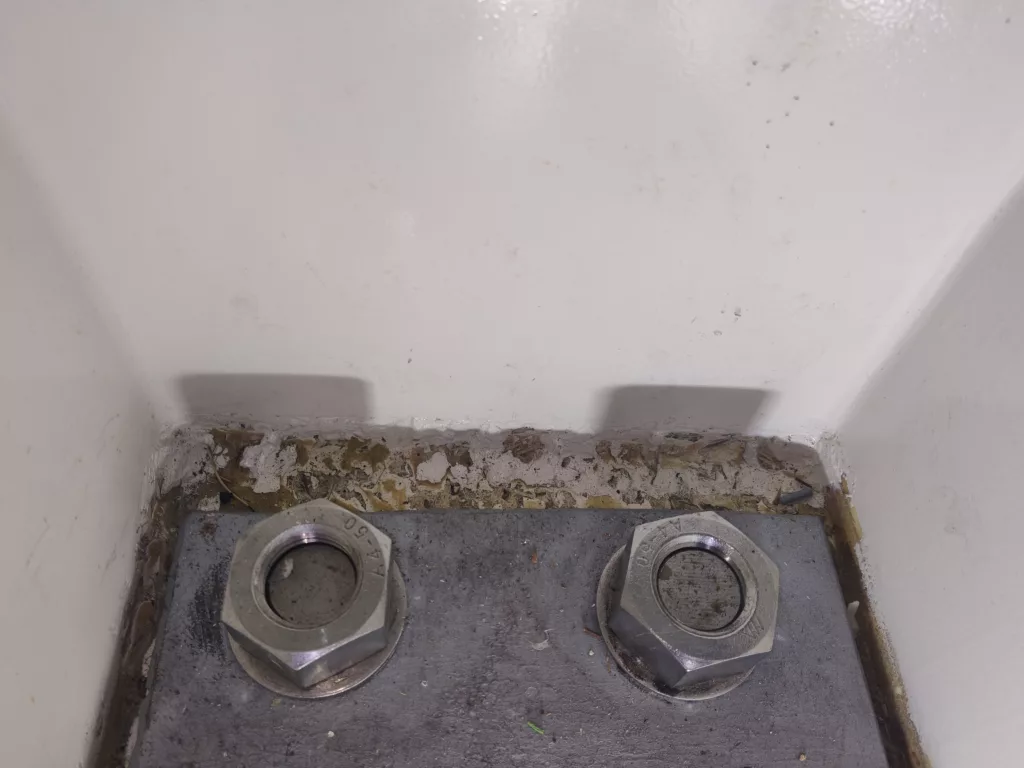
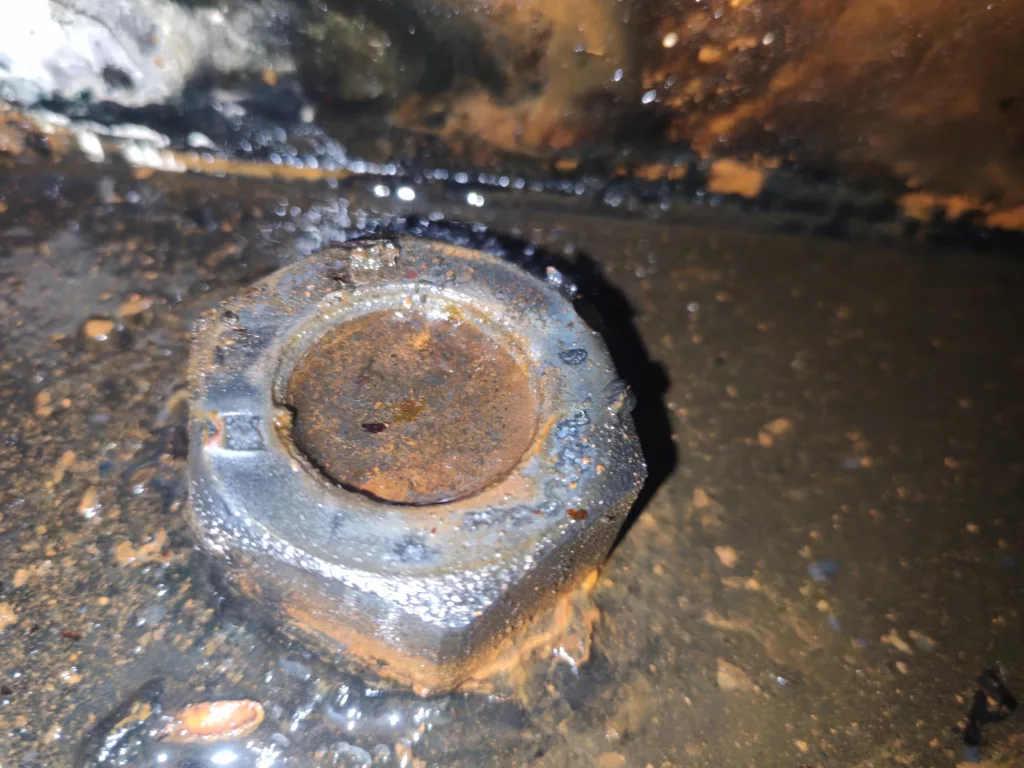
Here some example….
SEA Superyacht Experts Alliance
Nice clear write-up — useful checklist for buyers. Quick question: when you spot excess lamination but the nuts look borderline buried, is it usually acceptable to spot-face and reuse existing bolts if corrosion is minimal, or do you recommend replacing bolts as a rule? Also, for buyers without haul-out access, any interim checks to assess thread engagement from the bilge?